
Why everyone should care about consent
Yoga goes beyond the only concept of physical and mental well-being. It is a way of life, emphasizing harmony and connection between the physical and spiritual body. Between the verbal and non-verbal aspects of one’s life. Since a few years, there has been a growing awareness globally, but also within the yoga community about the importance of consent and how to deal with it.
Consent management in this case refers to creating a safe and inclusive environment, where studio owners, practitioners and yoga teachers can feel respected, empowered, and safe. In other words, clear boundaries and communication about everyone's needs and preferences in (non-)physical hands-on adjustments are acknowledged and respected.
As a practitioner, I cannot say on how many days I only wanted verbal cues but would have loved hands-on adjustments for specific poses (e.g. sleeping swan aka pigeon pose, anyone)! Yet on some other days, I felt the other way around. And what did I do about it? Not much, I always passively waited for the yoga teacher to offer hands-on or ask who wants help. Yet, yogi*nis also bear the responsibility to openly and proactively communicate their boundaries and give or withdraw consent as necessary. We should all feel safe to speak up if we are uncomfortable with a particular adjustment or if we have any concerns regarding our physical or emotional well-being.
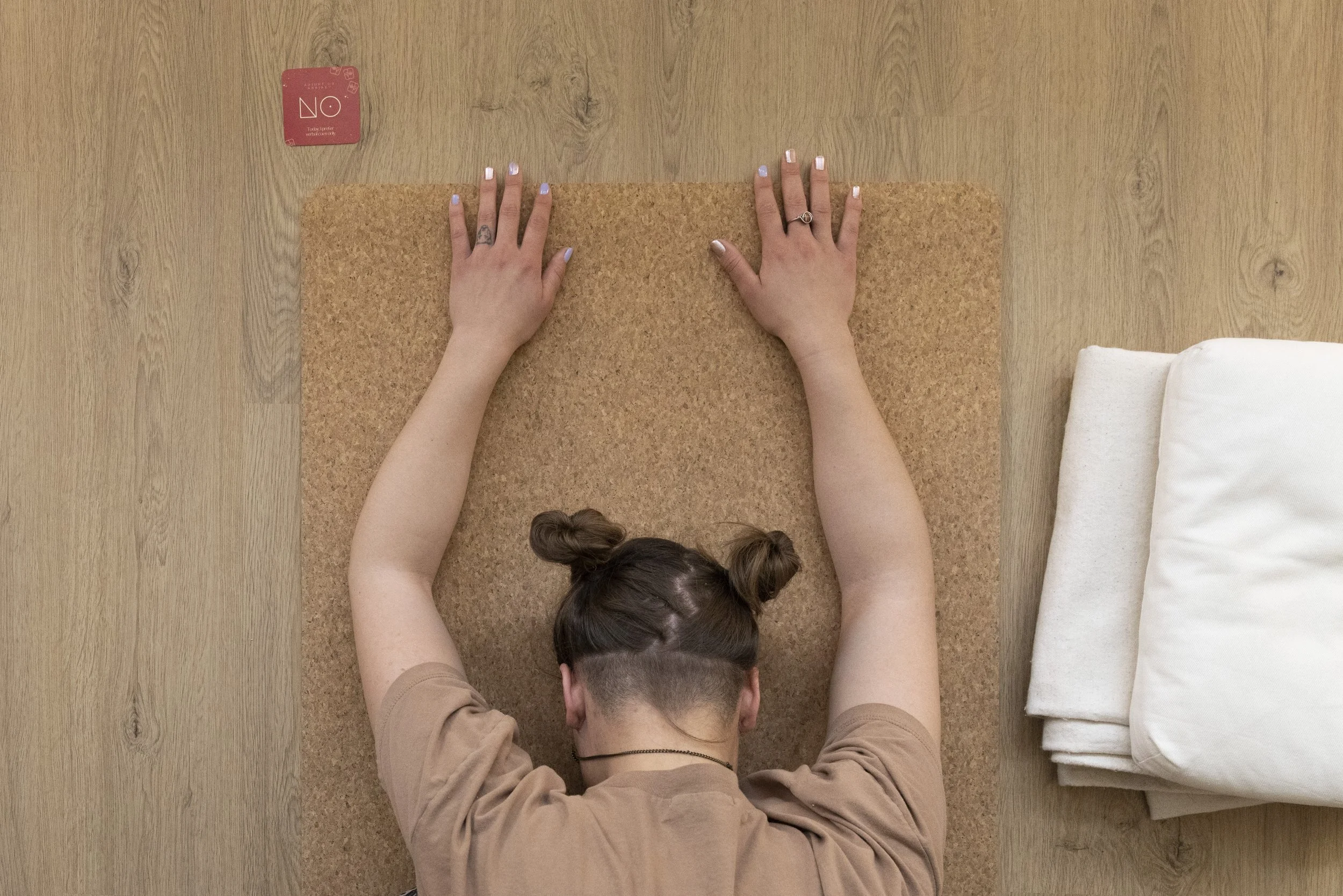
Photo credit: Rahel Zuber (2023)
As Donna Fahri says in her book “Teaching Yoga”*, the yoga teacher's genuine aspiration and profound dedication to the ethical principles are of utmost importance. As I became a yoga teacher myself, I realised that managing consent while holding space can be overwhelming at times. Raise your hand if you have never forgotten who wanted verbal communication only and simply stopped hands-on adjustments because you were confused? I wanted to incorporate consent management not as something administrative, but as a part of the whole. Before, during and after every class.
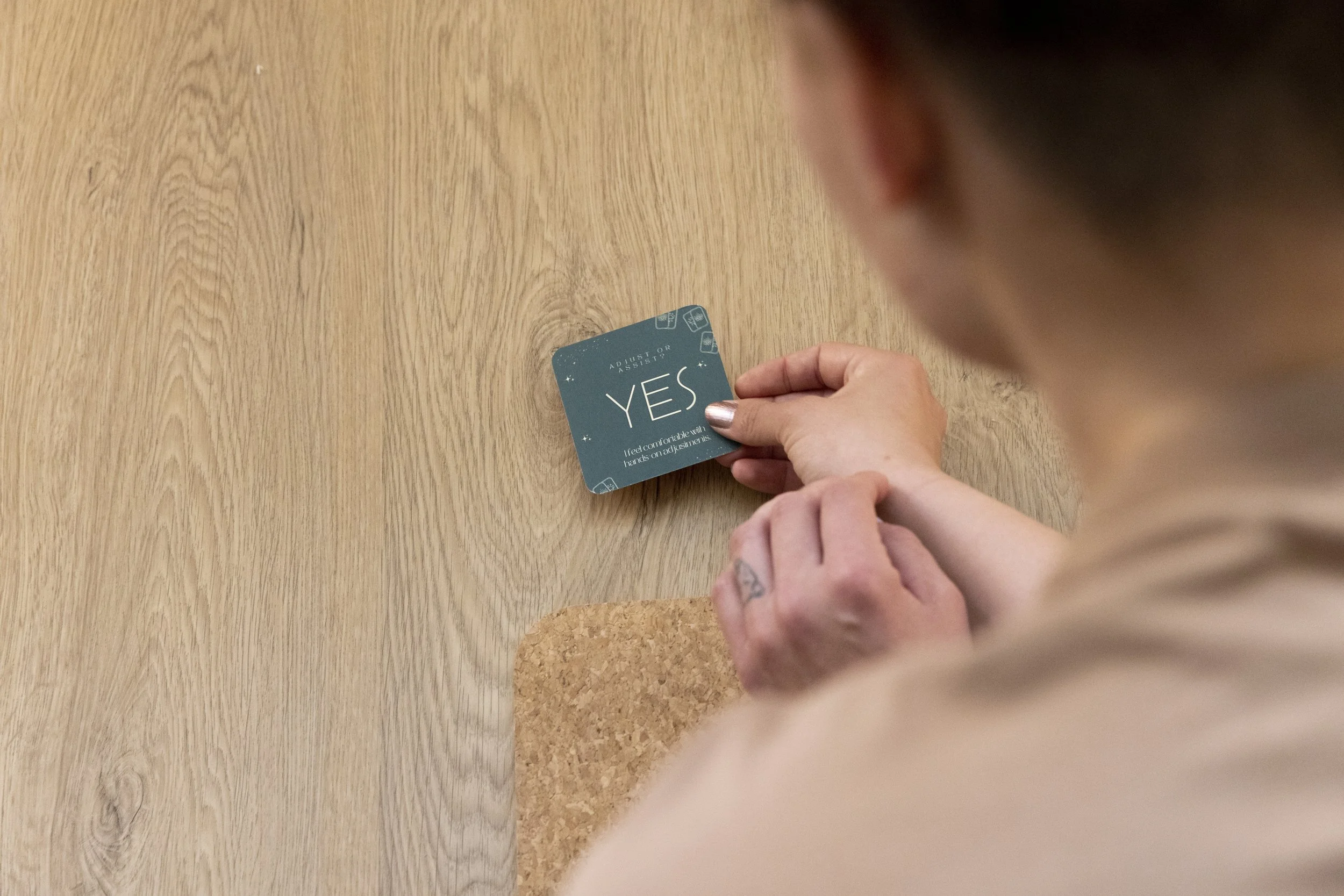
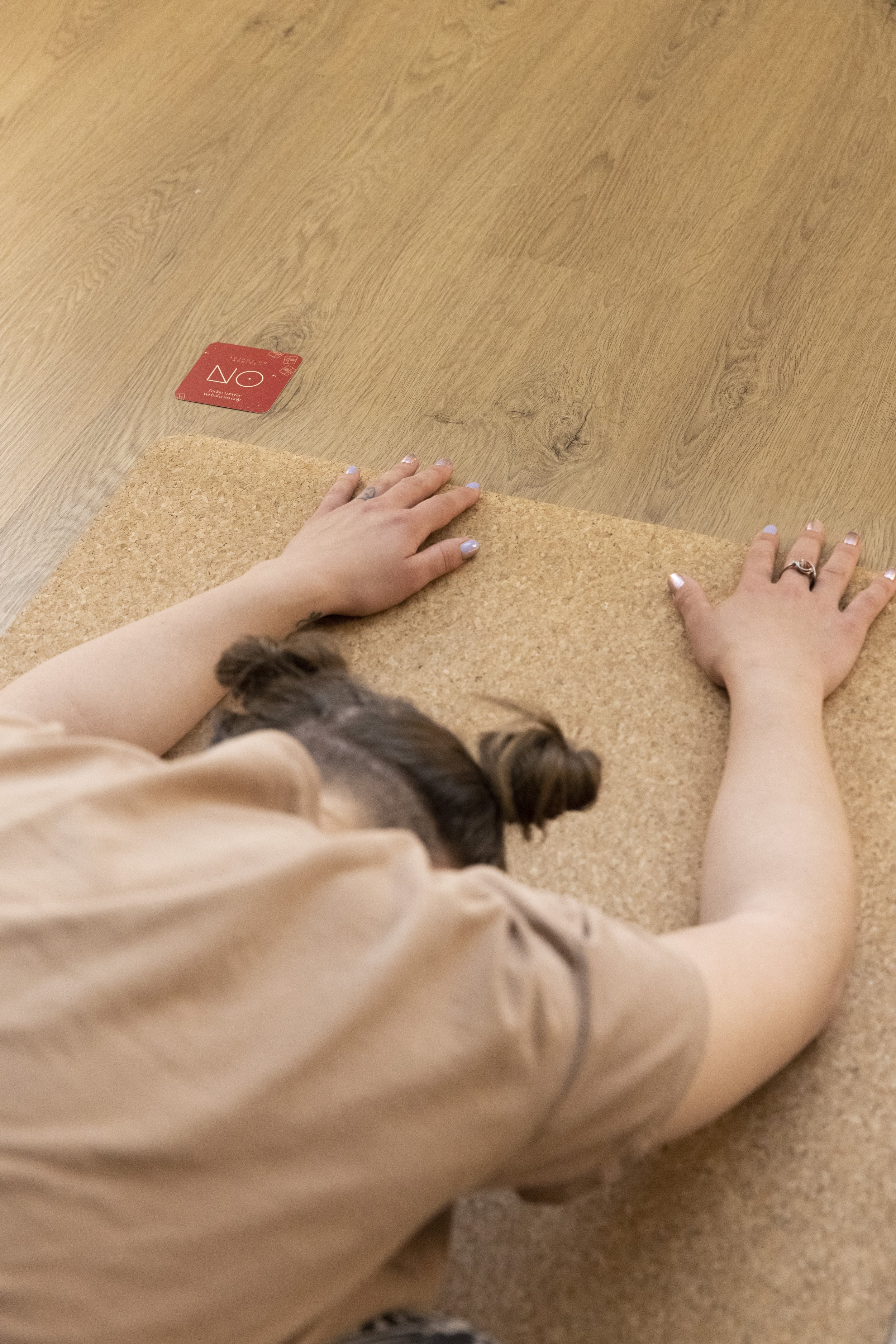
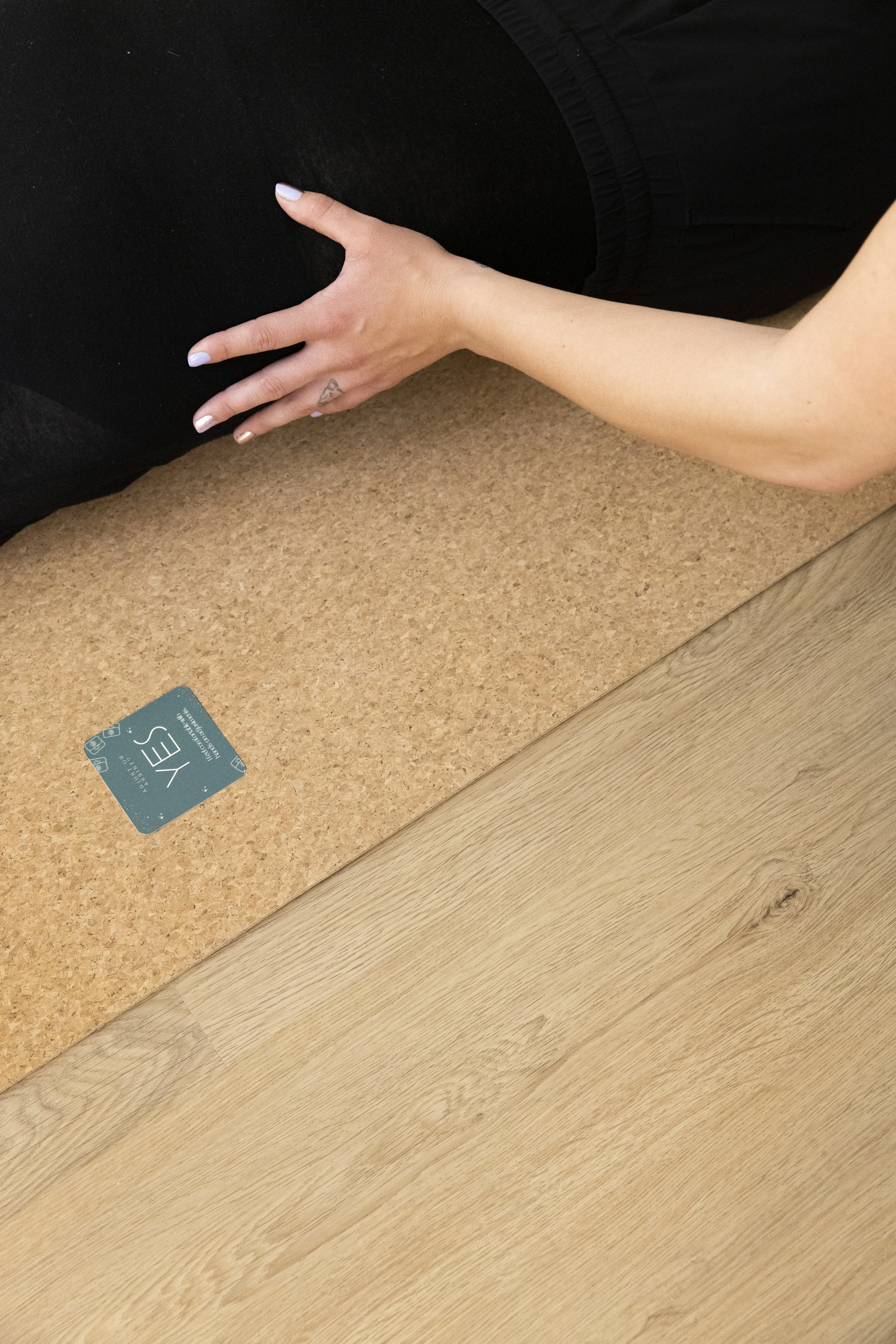
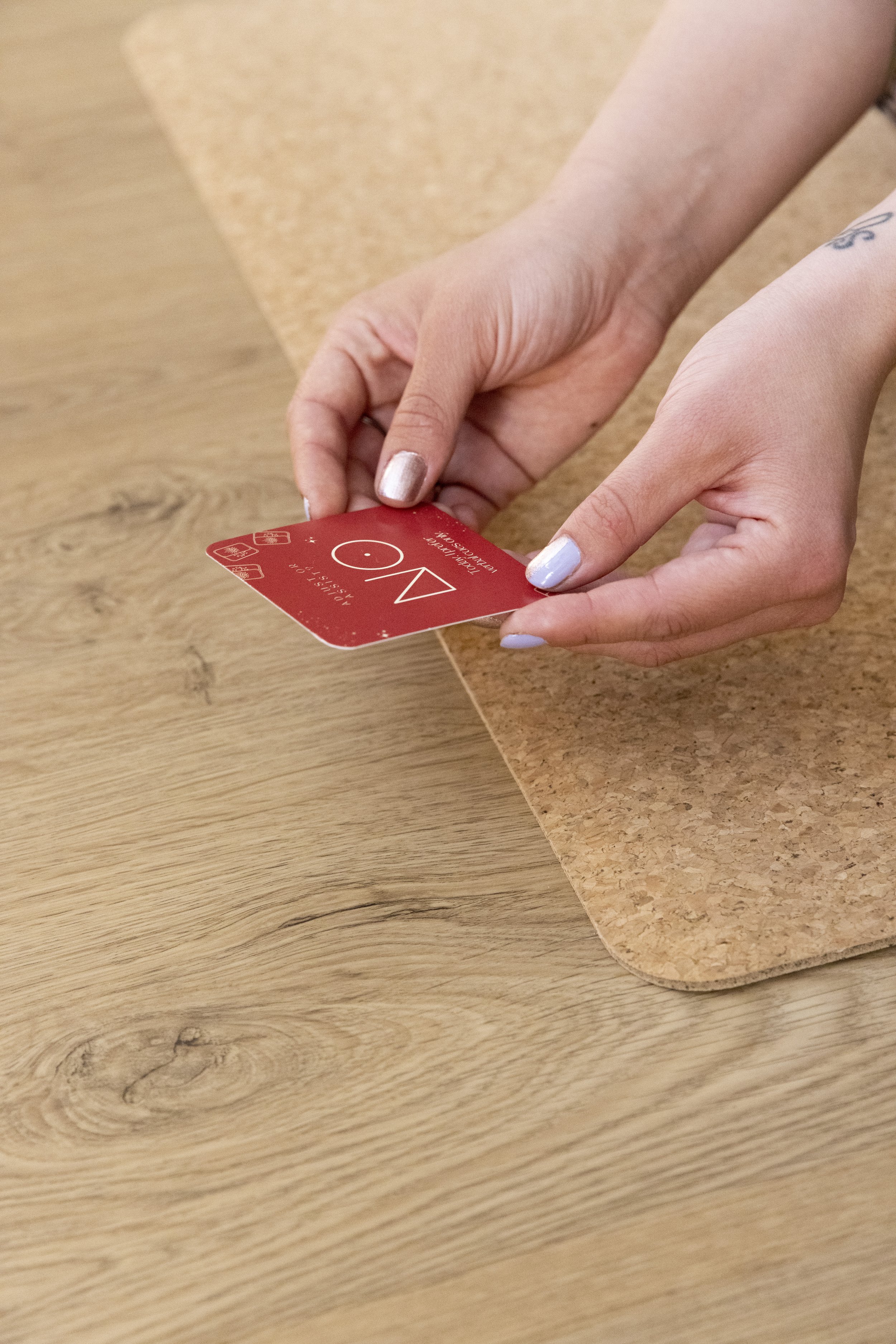
I believe that we need to prioritize consent in all aspects, from physical hands-on adjustments to verbal cues and even the use of people' images or testimonials. Off the mat, I ask permission for the use of people' images or testimonials, for my website, but also social media posts. On the mat, I use my own consent cards. Consent cards are here to help establish clear and explicit preferences for physical touch between the yoga teacher and students in a non-verbal way. It helps teachers and students feel safe and comfortable. At the beginning of the class, I explain the purpose of the consent cards and provide an opportunity for students to select what reflects their preference of the moment.
Yes, it can be overwhelming. But it doesn’t have to be. Be clear, be confident and don’t overthink it. Be genuine. The beauty of consent is that it is not set in stone and it can change, not only from one practice to another. But also from one pose to another. Whether a space holder or a yogi*ni, your goal should be to make it feel right for the present moment. The more you will practice it, the easier it will get. Try it out.
Featured products
You can shop the printable consent cards I designed and use for my own classes on my Etsy Shop.
*When you buy something I genuinely recommend, I may get some coffee money — at no additional cost to you.